Tuesday, 15 January 2019

Caravelas

We stopped at Caravelas for a coupe of nights to visit Parque Nacional Marinho de Abrolhos, a collection of five islands plus a few rocks off the Brazilian coast line

Sun rise over the beach.
This is a common sight on many Brazilian beaches, a hawker carrying a barbecue in a bucket over which he roasts see cheese on sticks for you.
Then it was time to board a catarman for the three hour journey to the off shore islands.
On our way down river to the sea we passed a log ship being loaded with sustainable timber grown on the hilly slops in r=the local area.
ND after three hours we reached the islands, four of the five islands are part of the national park and on the fifth is a light house manned by five soldiers, the wardens house and a house for volunteers and researchers.
One of the beaches.
On land are frigates, white and brown boobies and a couple of other birds whilst in the sea there are turtles and a range of fish and corals.

 One adult stays with their chicj=k whilst the other adult goes fishing.
 One of the chicks which is moulting from its chicks feathers to its adult plummage.
 A selfie with a frigate in the back ground.
 On our way back to our river bank port in town, we passed the timber ship which had finished loading and was putting out to sea.


Ouro Petro

This is the site of an 18th century gold rush. The first colonists arrived in 1698 and the first gold mine was opened in 1710 and there were to be more than 450 mines dug into the hillside.

The main square is dominated by the white washed walls of the Governors Palace complete with bartizans. In 1868 the building became Brazils first Mineralogy University.

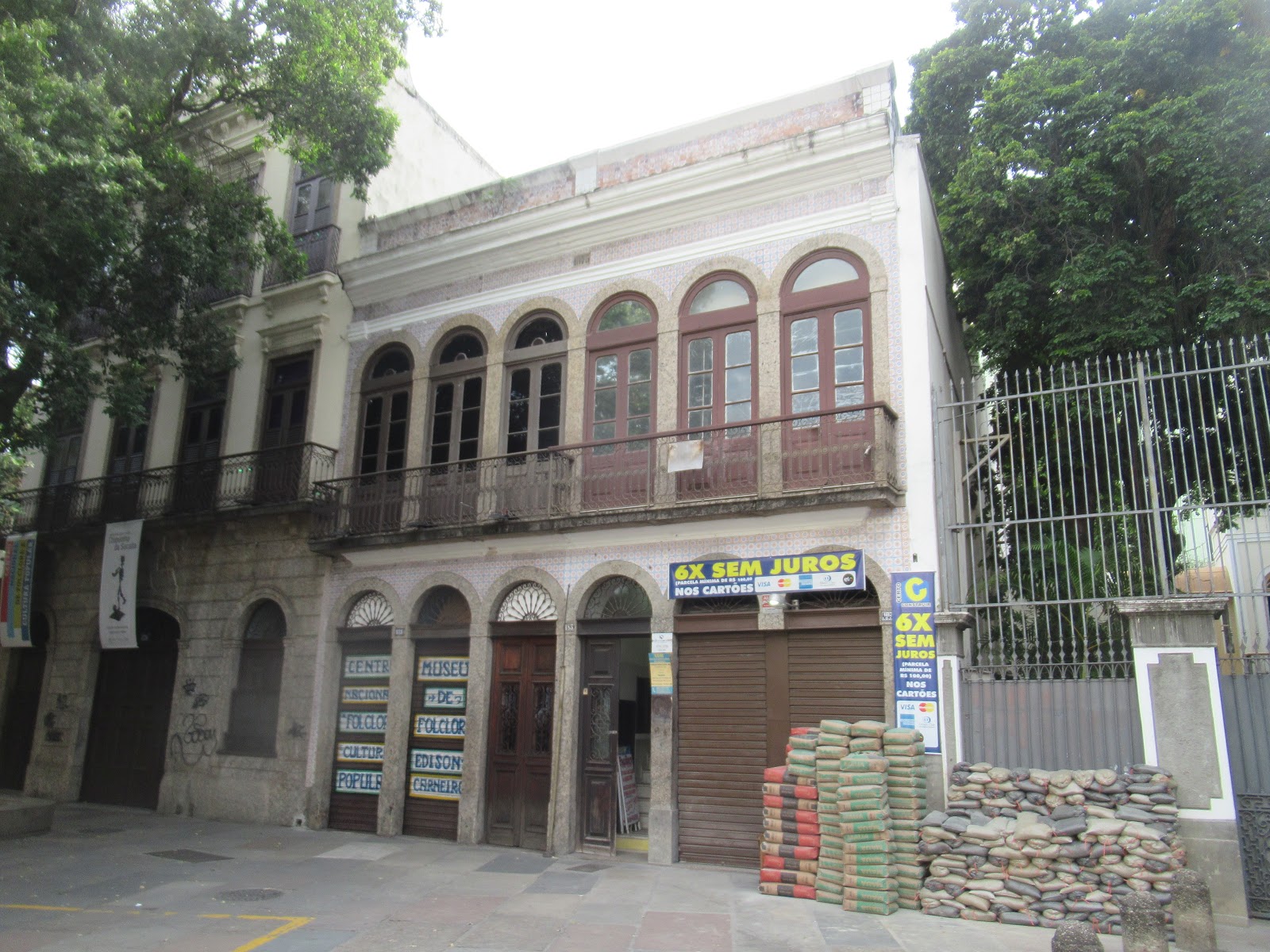
There are other old buildings opening onto the square such as these two buildings used as offices.
Another old building with balconies and railings.
The  building opposite the Governors Palace was the prison.

One of the many churches in the town and the whole of the entire of the town is a UNESCO designated area. The church with the most impressive insides is the Church of Our Lady of Pilar which boasts 434kgs of silver and gold decorating the internal surfaces.
The Church of St Frances of Assisi whose ceiling is a masterpiece of painting by Aleijadinho.

There are many steep narrow cobble streets that led off from the main square.
An interesting old building on a street corner on a steep street.
I snapped this picture of a dog looking up the street.
The town grew to a population of over 150,000 people when cities like New York and Rio had populations of 50,000 and 30,000 respectively with 70% of the population being slaves from Africa but when the gold ran out the population crashed to just 10,000. Manu buildings were abandoned but the local university renovated many of them and use them as lodgings for students.
Aleijadinho's house.

The entrance to the oldest mine in the town. The owner built his house in front of the mine hiding it from the tax authorities who taxed the property as a house, never realising that there was a mine behind it which would have been taxed at a higher rate.
Me and some of the group wearing hair nets just before putting helmets on and going down the mine.
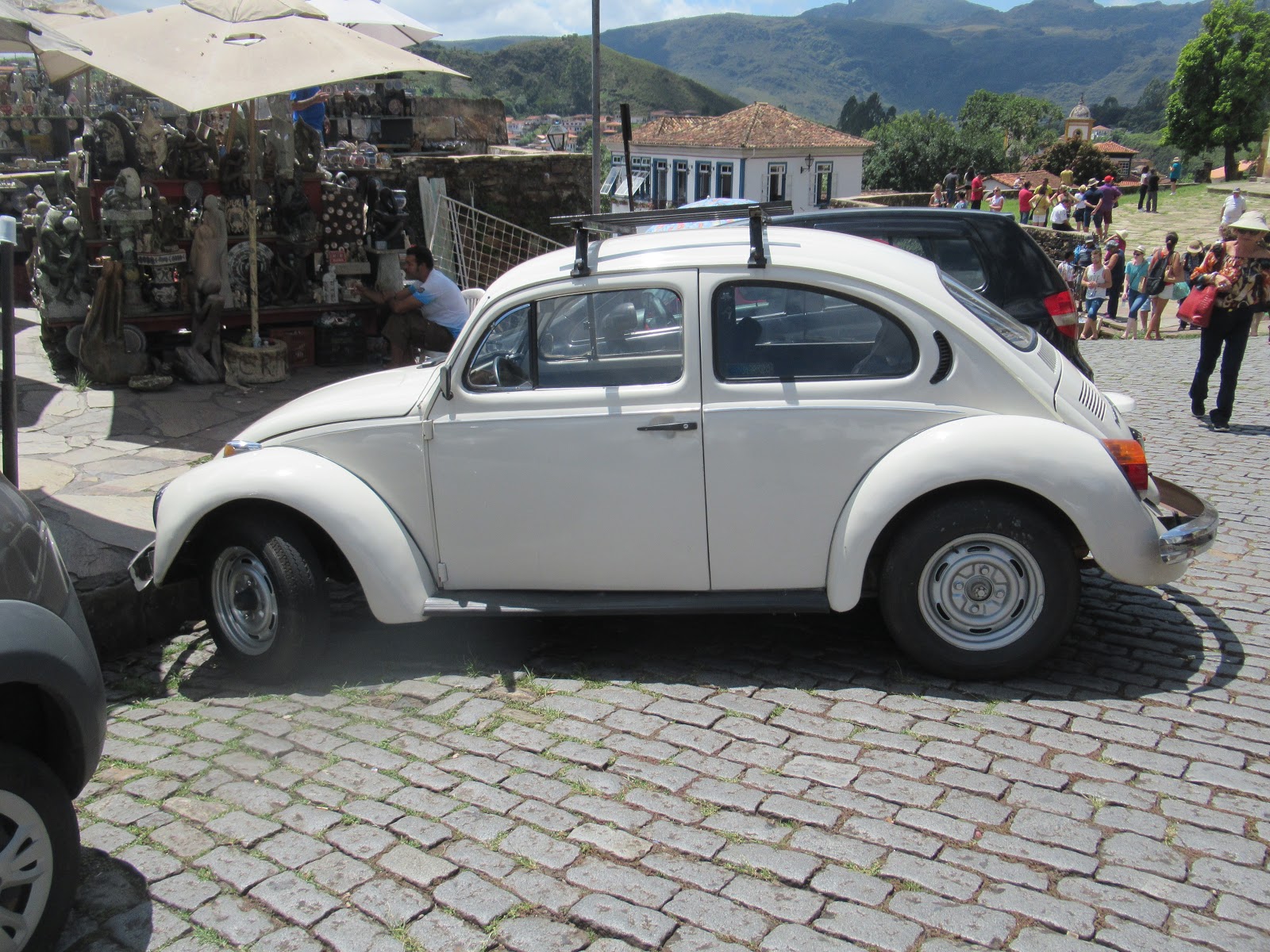
 And of course yet more vochos...a white one with a roof rack...
 ...a cream coloured one...
 ...and a yellow one on the road ahead of us as we head off to the next stop along the coast.

Sunday, 13 January 2019

Congonhas

We drove through mountains on a very scenic route.


With deep valleys and distant peaks.
We stopped at Congonhas where the famous Brazilian sculpture Aleijadinha created twelve statues of the twelve apostles.
An down the way out of the city we passed a few more beetles. A white one.
An unusual lime green colour.
And our next stop is Ouro Petro, meaning Black Gold.

Monday, 7 January 2019

Teresopolis

After Rio we drove the 70kms to Teresopolis and the Parque Nacional Serra dos Orgaos, named after some of the tall pinnacles associated with the organ pipes of cathedrals back in Europe. Our camp site had a great swimming pool, clear water and clean but so clean it was often shut as it wa undergoing cleaning.


 It was a camp site and a caravan park but oddly, all the caravans were parked under tarpaulins.
 The park had several streams and waterfalls and many pools where you could have a swim.
 We climbed up through the jungle to reach a ridge with a mirador.
 The view from the mirador was obscured by clouds but if you waited long enough you might get lucky. This was the best shot with the Gods Finger pinnacle on the far left.
 On the other side of the ridge was a view over Teresopolis.
 We had our packed lunches overlooking the large lake near the visitor centre. We saw several coatis, a racoon like creature which scavenges through the jungle and the picnic sites. We were warned not to fed them but they would circle and if you were not alert, one would rush in and grab food out of you hands. We were a large group of adults  so after a few attempts, they moved on looking for families with children who would be easier to steal from.
 And there were still vouches still to see as we walked through to do some shopping.
 Danny, Noodles and Carol were in the shop looking for umbrellas and chairs for the beach which we would be visiting in a few days time and I got a picture of a gold vocho but it was speeding and earlier opportunities were obscured but lamp posts, pillar boxes and a phone box, seen in the left part of the photo.


Saturday, 5 January 2019

 Rio to Cartagena. The next adventure begins!

I arrived in Rio and made my way to the hotel in a lovely area developed in the late nineteenth century. One o the older buildings under going some refiurbishment.
 My hotel. A beautiful building on the outside but the inside was in need of a little more attention and modernisation but I did like the price.
I was reintroduced to Spongebob, the big yellow truck that would be home for the m=next four months. I ha travelled on board her before and remembered most of the detail. The drivers with us were Paul that I ha first met in Argentina and again in Africa and Danny who I had met in London some years before.
On the way out of Rio we passed the Sambadrome. this is a series of tall spectator stands, like the two long sides of a large football stadium but the two sides are closer together and the ends are open. This is a permanent structure to allow crowds to watch the carnival display as the floats drive down the centre.
 Another view of one of the dozen pairs of stands.
Then it was up into the mountains leaving Rio at sea level to cross a pass at 980m in the mountains.
 The Finger of God overlooking the top of the pass before descending into Teresopolis.
And now that I was back in South America, I renewed my love affair with vochos or VW beetles. A light cream one...

 A two tone one