Thursday, 23 February 2017

Vochos, beetles, fusca, bugs or veedubs

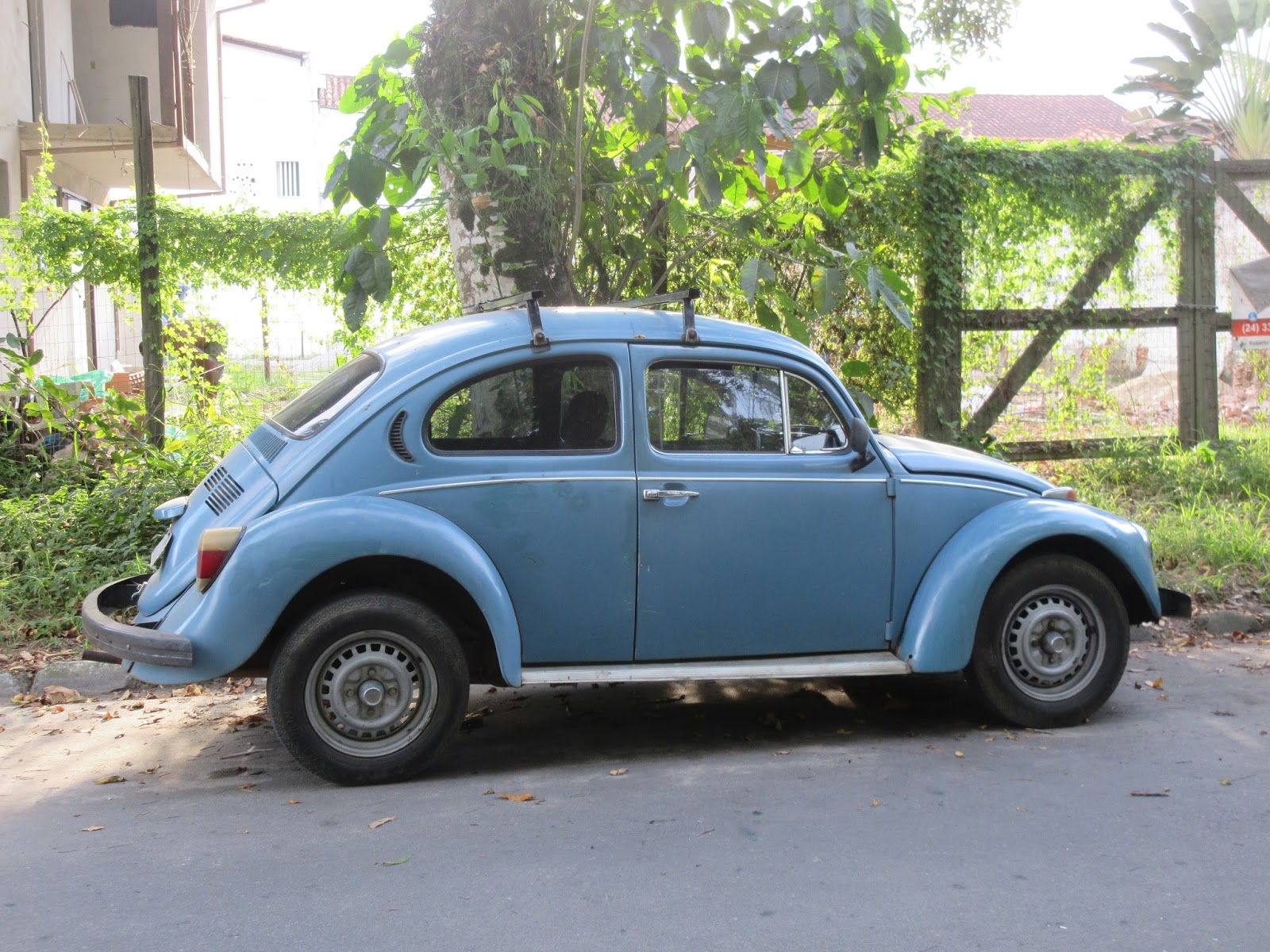
There are lots of names for them depending whether you speak Spanish, English or Portuguese or come from Australia or use a generic term. I had not seen such a concentration since Mexico but just in a small town like Paraty, there are loads of them wherever you looked and I had to add them to my collection.

Sahara yellow, perhaps brown with a few rust patches that had been partially repaired.


This might appear to be the same colour but this vocho is subtly different....it had a roof rack.
I had seen several red cars around town but still hadn't get a side on photo.
The shade makes for a two tone effect which rather spoils the photo.

This isn't two tone but some rust repair work to the back wheel arch. and a slightly lighter shade of blue.
This is the original Herbie car, number 53.
Yet another shade of blue...or perhaps just tired and needing a coat of wax and a polish
A Saharan yellow bordering on brown car without rust patches.
A car in need of some attention.
At last, I found a red vocho! (and not a duplicate as this one has an unpainted running board.
A white vocho and not a duplicate as this one doesn't have a roof rack.
The photo doesn't show it as a true colour but in the flesh, this was an off white colour.
 And this white vocho has different hubs.


Paraty, UNESCO World Heritage site due to its preserved Portuguese Colonial architecture.  

We were in a coastal hostel just outside of the town of Paraty. It is a UNESCO World Heritage site due to its colonial Portuguese architecture in the historic old centre. Its sheltered harbour was a great asset and there was an Indian track that climbed into the hills and the heartland. Beyond the hills is the province of Minais Gerais where gold was found by the first adventurers.

They used the trail to get the gold down to the coast at Paraty and hence its importance. From here it was taken by ship to Rio further up the coast. However a better route was discovered that lead from the heartland direct to Rio and Paraty was virtually abandoned. Hence it has not suffered any development and has preserved it architecture.

The river that runs into the harbour and the bridge over the river.

A view along the harbour mooring area.
Some of the buildings along the river.
One of the four major churches in the town.
The east front of the church.
A couple of shots of the inside of the church.

The square in front of the church.
Lots of photos of the main and side streets.


It is approaching carnival time so that all the streets were festooned with tinsel.


Some of the streets were built at the high tide mark and the sea floods in and washed the streets clean of straw and horse dung.


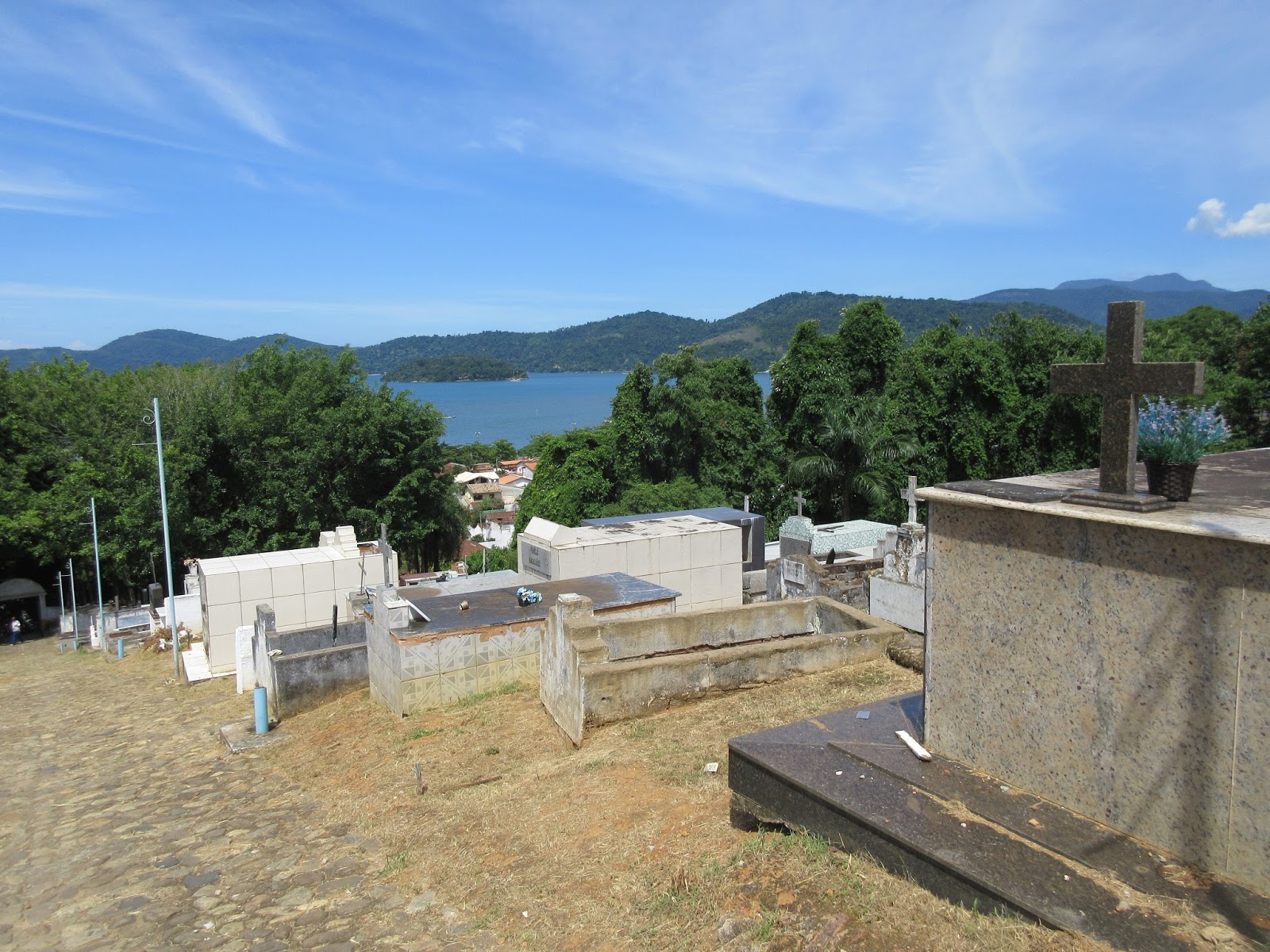
I also visited the cemetery on a hill overlooking the town but I didn't find the wealth of lavish funeral architecture that I had hoped to see but the views were good.


Wednesday, 22 February 2017

Walking in the Pantanal

We were going for a trek through the jungle but to get to a good spot we had a ride on the back of a truck. We had not gone 100m when we came across jaguar prints. It was ironic that we had driven for miles along tracks through the jungle and we had a visitor just q1oom from the entrance to the posada. I reflected whether I would have slept in a hummock in the open had I known that there was a jaguar walking about not far away from me.


a little further on we stopped to observe a tortoise although it followed its defensive option and pulled its head in and its legs. We watched for a while and then it tentatively put its legs out and tried to walk backwards to get away from us. We drove on to leave it alone.
There were toucans flying about above us marking quite a racket and occasionally grouping together in the trees.
The area is just flat wetland for as far as the eye can see.
And every where were caiman, such as two sun bathing on the island in the middle of the photo and a close up.

And another capybara.
A boa constrictor crossing the road in front f us. It was lucky as we slowed to look at it although most local traffic would swerve to run it over.
It stayed still util it saw or rather smelt us and then it slithered away quickly into the undergrowth at the side of the road.
We didn't even need to go very far to see the wildlife as there was plenty walking around the posada.

Somewhere nearby in the grass was a dead or nearly dead animal as evidenced by the vultures circling in the sky and some watching from their perches in a nearby tree.
Though some bushes we caught glimpses of some deer.

And then it was time to leave, taking the truck along the bumpy road  for an hour to get to the main road and smooth tarmac. Then it was a long two day drive to get to the coast. Driving standards vary but we saw few accidents although this lorry had taken a turn at speed and had tipped over.
We had seen plenty of railway tracks but no trains. And then we saw one parked in a siding but no engine and so far away even with a zoom that there was little to see but it proved that the lines were still used however infrequently.
The roads to date had followed the slopes of the hills without any cuttings or embankments. As we got nearer the economic powerhouse of the country on the south east coast near Sao Paulo and Rio, there were tower blocks and the road builders had made cuttings, embankments and occasionally tunnels through some of the hills.
At least we had travelled hundreds of kilometres and had reached the sea and our ext stop for a few says.