Saturday, 2 July 2022

Vukovar, Croatia


Vukovar, Croatia

Vukovar is located where the Vuka River joins the Danube. After the First Word War, Hungary lost much of its territory and several new or enlarged states emerged. Croatia was established and became an integral part within the Federal Republic of Yugoslavia.

The Eltz Manor castle in the city was built 1749 - 1751 by the House of Eltz and was enlarged and modified over time. The communists confiscated the castle in 1944 but it was finally returned to the family in 1990. It was badly damaged during the Croatian War of Independence. The castle is depicted on the Croatian 20 kroner banknote.


Some of the river traffic, a single tug pushing eight barges down river. There is some traffic but not nearly as much as I saw on the lower Rhine.

The water tower is an iconic symbol of the city.

There are 640 holes in the structure caused by Serbian attacks as they were eager to topple the tower as it was the symbol of Croatian resistance.
The cross at the mouth of the River Vuka where it joins the Danube although it is so small that it is not navigable. 

Hotel Danube, an eight storey building overlooking the Danube and it was on the front line. It was damaged during the siege and later was used as barracks for the occupying Serbian troops. However it has yet to find an alternative use. Some of the damage was repaired but people just didn't want to book a room there so it is empty and slowly deteriorating.
A memorial to the damage inflicted on the town. It is a series of house fronts at an angle to signify the damage imposed.

This is the former pharmacy at one end of the main shopping street. It has lost its roof and is dilapidated. The owner was offered a new flat but he refused. He regularly plants flowers in the window  boxes as a sign of rebirth.


Two impressively restored buildings, the one on the right would figure later in the post. 


Another impressively restored building.


One of the former wine barrels from a major local wine producer now being used as a pub table but the name is still clear, Ilocki Podrumi who produce more than 5 million bottles of wine a year. The company provided 11,000 bottles of their Gurwirtztraminer wine for Queen Elizabeths coronation and it still regularly provides wine for the royal household.


The former palace of the ruler of the area, converted into a beer hall by the communists. 


Its lower windows along one side show scenes of the city from postcards prior to its destruction. The building on the left has been destroyed but the one on the right is the same one that has been restored shown just four pictures up.

The old water tower, built in an art nouveau style as were many of the buildings in this area but this is the only surviving example. The date above the door is 1913.

This is the memorial to the worst war crime committed during the Fight for The Homeland when Serbia invaded in 1991. Shortly after the 85 day siege and capitulation of Vukomvar, the hospital staff, civilian patients and injured soldiers numbering 261 were taken from the local hospital to a remote farm. They were tortured and executed and buried in several mass graves.

                                       
A detail of the floor with cartridge cases embedded in the concrete.
A memorial to the massacred in front of the memorial building. Some 61 bodies are still not accounted for and are still waiting to be found.

                                                     
The spire of the Franciscan monastery overlooking the city and our last stop.

A view of our ship moored below the monastery. The names of the more than 2,700 people who died in the city during the war are recorded on the terrace overlooking the river. We saw a film of the troubles taken at the time and it was very moving, o similar to seeing footage of Jews being marched to the death camps by the Nazis fifty years before but in colour and just thirty years ago and ethnic cleansing and alleged liberation to justify their actions happening again in Ukraine today.

The inner courtyard.

The church spire from the inner courtyard.

One of the side altars.
The Scar of Vukomvar. The monastery was badly damaged but has been extensively repaired but this area only received minimal restoration as a memorial to the death and destruction from the four year war starting in 1991.
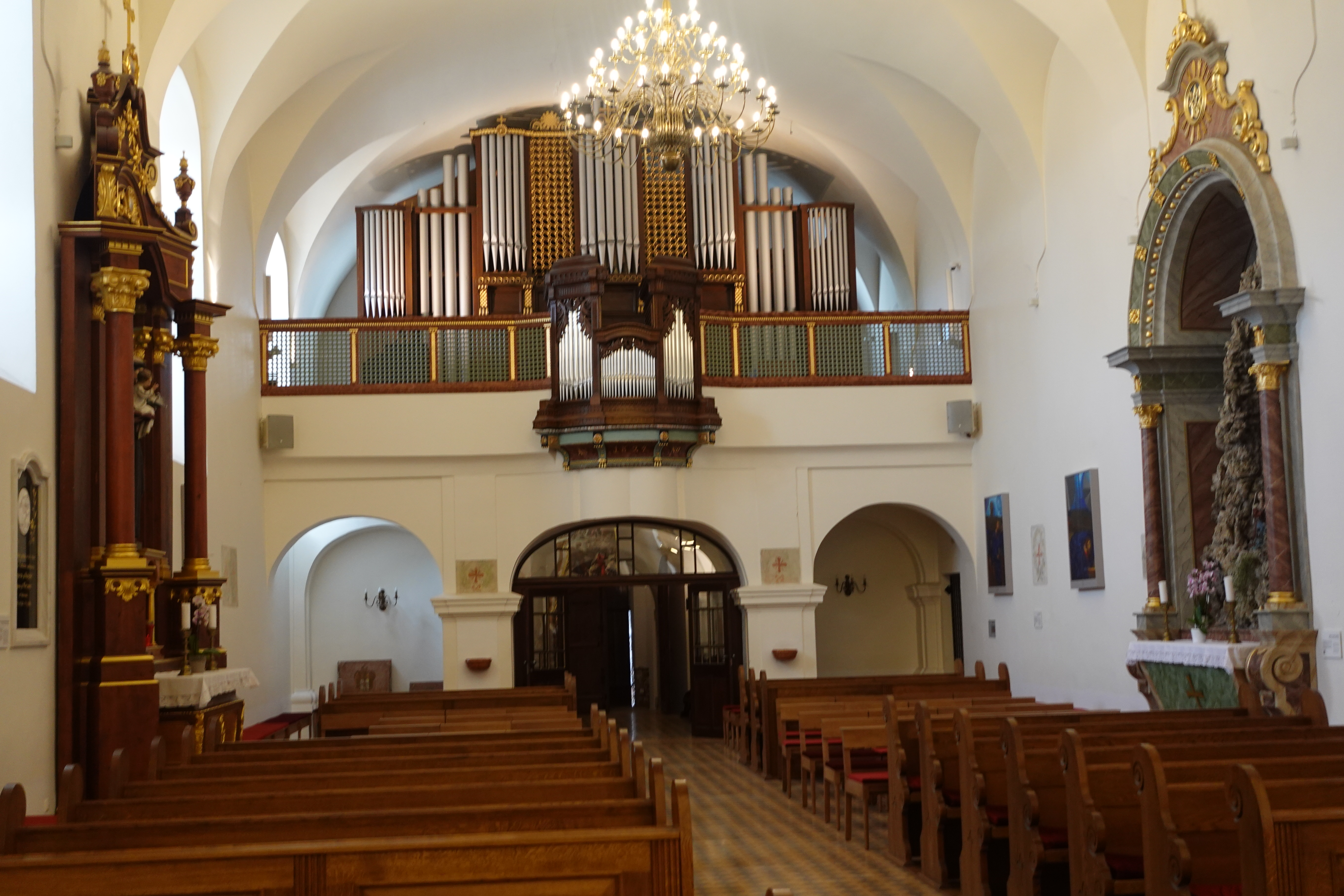
The main organ.


The main altar. The monks and townspeople are proud of the church as it is the third longest in the country at 58 metres.


A view of the damage at the end of the war. The Serbian forces were preparing to blow up the ruins as they retreated and were drilling holes in the masonry to place explosive charges. American General Jean Paul Klein heard about the plan and moved his soldiers into the city to stop the Serbians so that there was something to salvage after the war..

A view of Castle Eltz which is definitely not a castle but a palace.

The main entrance.


One of the wings at the back of the main palace overlooking the Danube. The city was hosting a film festival  and this was one of several locations to host guests and hence the mass of chairs.
A view of the back of the palace overlooking the Danube.
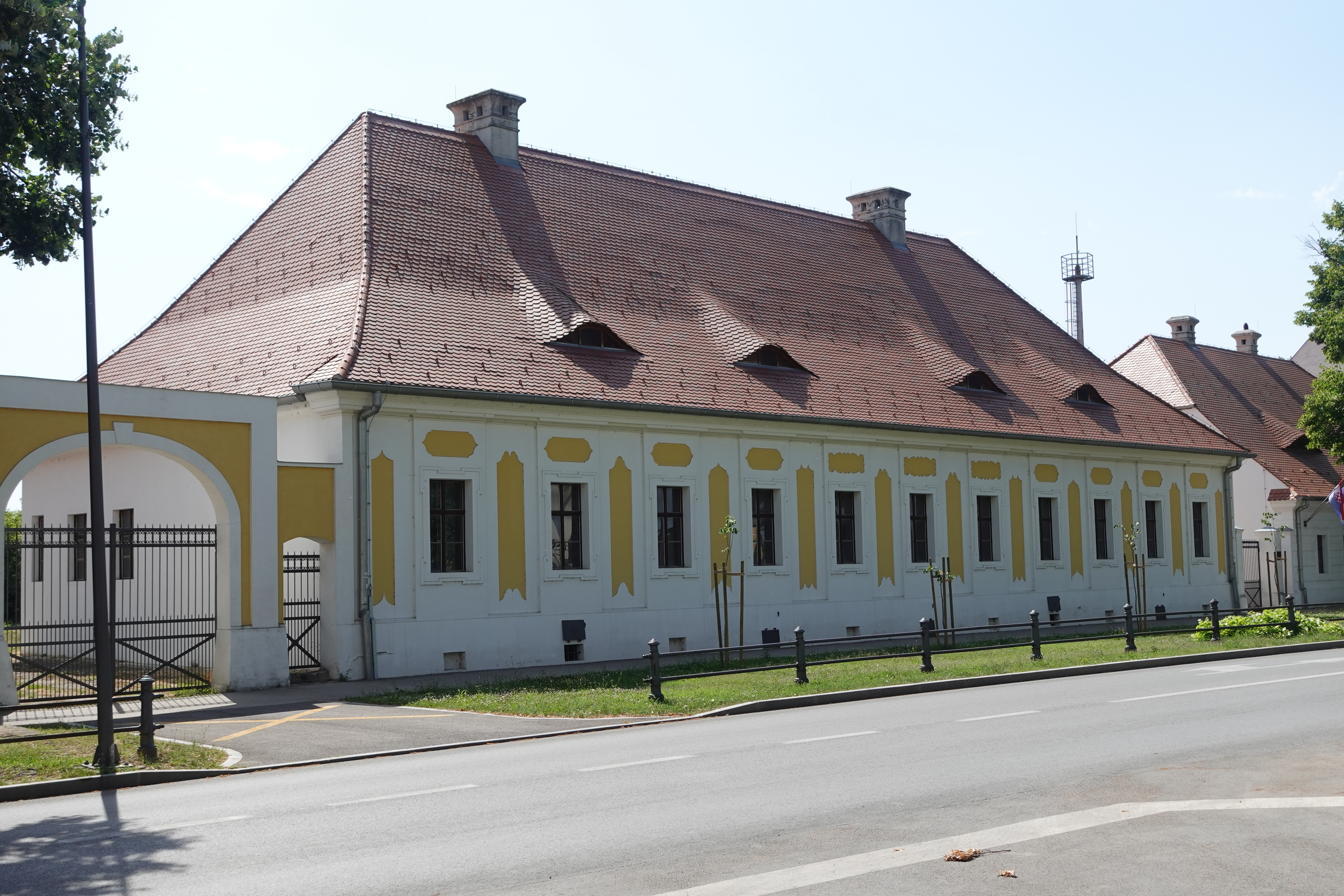
The wine cellars of the palace on the other side of the road.

Some of the interior features...
...an oven in lieu of a fireplace in one room...
...part of the ground floor, wonderfully cool in the heat of the day with arched ceilings...
...a mirror and entrance to a reception room with beautiful marble flooring...

...an ethnological display very similar to the one we had seen the day before in Kalocsa...

... and a collection of dozens of traditional costumes...
...and yet more.
Along the road were some municipal offices of the local Symeia district.


But where ever you went there were empty and damaged buildings...


...and some in worst states of repair without a rook with empty plots beside them that had been cleared and laid to grass but some modern building is taking place such as the tower block in the background as people have to have somewhere to live.


Friday, 1 July 2022

Kalocsa, the Paprika Capital

 Kalocsa, the Paprika Capital

After dinner, it was time to set sail. `the city water front is brightly lit and we were treated to a display. We had moored facing upriver so that the captain had the most control of the ship against the current for maximum manuvreability. We sailed up river to use Magrit Island as a roundabout to turn and set off down stream.

The Royal Palace.
The Parliament building.
The Magrit Bridge.
A party boat with loud music pumping out across the water.
Another boat moored on the water front.
And a  modern building with coloured lights that changed as we sailed past...
...red...


...and green plus over colours.

We sailed overnight ad reached Kalocsa on the Great Hungarian Plains. This is a huge flat area and after the hills and gorges, there wasn't a hill to be seen. The elevation difference across the whole plain is just eight betres from it highest to its lowest point.

Kalocsa was founded by King Stephen in 1040 together with the bishopric in the city although the cathedral only dates from the 18th century. The plain may be flat but it is fertile land with plenty of water and sun. It is known as the paprika growing capital of th country and Hungary is the world' largest producer of paprika and cooks use it in just about every dish. 
Our first stop of the day was a Folklore Museum. It was donated to the city by a local man in 1951 and preserves the way of life carried on for centuries. It has a row of farm buildings converted to a theatre, souvenir shop and modern toilets.
The former farmhouse and living area was built on a small man made mound. Before the Danube was tamed by engineers, this area was fertile but swampy in places and subject to flooding.
Paprika hanging up to dry under the eaves of the house.
The farmhouse has just four rooms and through the front door, the first room is the kitchen. 
To the left is the Guest Room or Clean Room with a window looking out into the street. It was keep clean and tidy and not used by the family except to house guests. Glass was expensive and there was a window tax so there were few other windows in the house.
In one corner was an oven to keep the room warm with the hole to fuel the fire in the kitchen and smoke escaped through a hole in the roof of the kitchen, not a chimney.
The other side the kitchen was a living room where the family would sleep in winter. This farmhouse was also unusual as it had a further room beyond...
...which housed many of the artefacts that the wife would create.
Underneath the house was a storage area.
It was a short drive to the House of Paprika, a museum about paprika. The whole of the bottom wall of the house was covered with paprika drying in the sun.
It also has some agricultural displays and several different types of paprika growing in the garden, sweet, strong and hot versions, each with their own names and characteristics.
A hand plough.
Some of the many products made from paprika.
Another plough.

Some of the furniture inside the house and a little more upmarket than seen in the farmhouse.

And then it was a drive to a horse farm to see a demonstration of Hungarian riding skills. 

The main reception area and souvenir stall.
We were treated to wine, a slice of bread with lard and paprika topping plus a glass of apricot brandy or locally made palinka.
The horsemen were waiting and dressed in traditional costumes, baggy pantaloons baggy sleeves to their shirts, waistcoat and hat.
We were introduced to the local breed of cattle. They have large horns and slow but are very strong, useful to pull heavy wagons through the mud. Their meat makes excellent dishes but their milk is inedible for humans.
A closer detail.
Then it was a demonstration of riding skills and of course cracking the whip
...and in tune with each other...
Other skills demonstrated included ...
...getting the horse to lie down...
...using the horse to see over long grass without getting on...
...notice the saddle which is thin with no girth strap, it merely rests on the horses back but its thinness means that the rider can feel all of the horses movements...
... the dog position, a horse sitting like a dog and if you ride bareback, you can use the hind quarters as a mounting block and as the horse stands up, the rider slides onto the horses back.
A greeting to the crowd and then some games, like the Hunting Game, using the whip to knock over a small log standing on the ground which was a useful skill for hunting small game or rabbits...or here, the Balancing Game, riding around the area wth a glass of wine and not spilling any...
...or the Love Game...
...where one rider has the shawl of a lady and the other riders have to try and grab it off him and return it to the lady for her favour.


A carriage with three horses arranged side by side.
And a great feat...
...standing on two horses whilst controlling ten horses...the record is controlling twenty horses.


And then some carriage driving at speed around the area. The man in the back is the Balance Man who uses his weight to keep the wheels on the ground when cornering at speed, much like motor sidecar racing. Cornering just in front of the stand threw great clouds of dust over the onlookers.


And a last run past the stand by the carriage...

...and the man standing on the horses.

That evening we set sail but had to stop at Mohacs. It is where the invading Ottoman's defeated a Hungarian army in 1526. Their empire stretched along the shore of North Africa to Algeria, south to Aden and east to the Persian Gulf. They advanced north and captured Belgrade. 

King Stephen had to raise an army to protect his kingdom but the kingdom was weak and many of the nobles quarrelled with each other and didn't send troops to support Stephen who had to rely on German mercenaries who made up the bulk of his 25,000 army. 

They had some initial success but as the mercenaries were robbing the dead Turks of their wealth, the remaining Turks counter attacked and killed most of the 25,000 army. King Stephen's horse stumbled in the middle of a stream and fell on top of him, killing him. The nobles still couldn't organise a defence and Budapest fell to the Turks who forgot to leave and stayed for 150 years.

That evening in Mohacs was where the Croatian border control  boarded the ship to check our passports. It was just one person but it was super efficient and it had to be as it was during dinner and nobody wanted their dinner to get cold. 

The passengers were called forward by deck number and the receptionist had all our passports in cabin number order. I gave my cabin number, the receptionist handed my passport to the official who looked at the picture, looked at me, stamped it and she was on to the next person.