Sunday, 6 October 2019

Saratov

Saratov

 The passenger terminal ar Saratov
 The Holy Trinity Cathedral.
 The from of the cathedral. It was built to an unusual design for traditional Orthodox churches and a later extension incorporated the belfry into the main body of the church when they were usually kept separate.

 The belfry also has a distinct lean to one side.
 Insu=ide the lower, winter church.
 The icon wall.
 The upper summer church.
 And then it was a coach ride around the city centre to see various universities, squares and statues from r=the comfort of our coach before making our way to the Crane Memorial set on the top of a hill overlooking the whole city from which you can gaze along the waterfront of the city that stretches between 70 - 100 kilometres. Different guides and guide books quote different figures and I haven't checked an authoritative source yet.

The Crane Memorial is part military museum, part eternal flame and part memorial. You are greeted at the entrance by a fighter plane and a armoured train.
 Complete with anti air craft guns.
 And another at the back.
 The navy have a space as well with the display of a fast river patrol boat.
 Abtiairctraft guns were essential and many different types were made...
 ...and with multiple barrels.
 Stalin's Organ or officially named Katrushka Rocket Launcher.
And several pieces of heavy artillery.
 And a selection of APC and tanks...
 ...an APC with machine gun...
 ...a light tank...
 ...icon T34s...
 ...of several designs...
 ...and a heavy self propelled artillery piece.
The eternal flame sits at the base of the flight of steps. The flight has several half landings, one for each year of fighting. And the are cranes mounted near the top of the metal column, since cranes always come back to the same nest.
 Each year also has a number of the major battles inscribed in stone.
Then is was a walk around the city central, with a statue to commemorate the 429th birthday of the city with the symbols for which the city is renowned.
 One of the very few churches to survive. The main cathedral was less lucky as it had its domes removed and was used as dormitories for students. This small church survived as it was concerted into a planetarium until the 1990's when it was restored and is now once again a church.
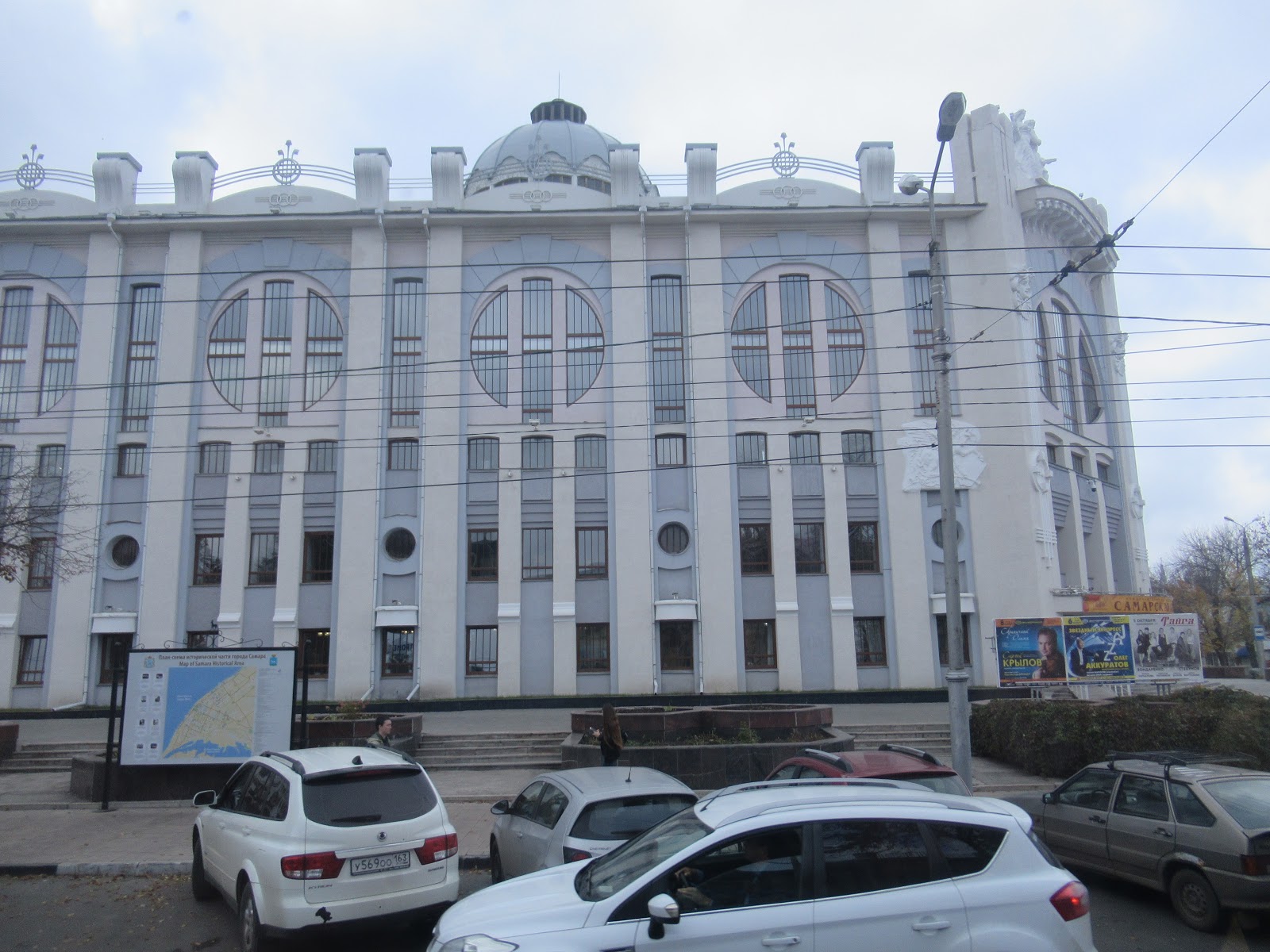
 And the Conservatoire in an unusual style, more like a Bavarian Rathaus than Slavic style.

Friday, 4 October 2019

Samara

Samara

This morning we arrived at 3am and anchored in the river to await our booked arrival time in the harbour of 8am. I felt that I was back in South America at the European Space Satellite Launch Centre at Kourou in French Guyana when I saw this Soyez Space Craft. But Samara is a major aeronautical and space engineering centre where Soyez rockets are made and shipped to French Guinea for launching commercial satellites.
Just up the road is a major square with a Yuri Gregarin holding some wings on top of a tall tower all made of metal, a symbol of the towns major industries, aviation and space engineering.
To one side of the square is the memorial to those who lived in the city and fell in battle for the country.
And all of their names are listed on the memorial.
The memorial nearby church looks authentic but like many churches, the original was destroyed by the Bolsheviks and this is a reconstruction.

During the Nazi invasion of Russia during the Great Patriotic War, the government was officially moved from Moscow to Samara and many of the diplomatic missions also moved. The government would use this building as their offices.


And just around the back is the entrance to Stalin's Bunker which was built secretly underneath the building and local residents didn't know it was there until it was opened as a tourist attraction decades after the war.
 A side elevation view of the structure showing two entrances at the top going down four storeys, then a technical level with the power plat, air conditioning, air filtration, pumps and power plants. Then another six storeys to Stalin's rooms, 39 metres below the surface.
 Some modern art at the head of the first shaft.
 The shaft used meal sections that were used to build the Moscow metro, so in fact it is a metro tunnel standing on its end.
 A view down one of the corridors.
 The wall supports.
 A gas proof door.
 Stalin's office.

     The light in his office.


 The main conference room.
A detail of the statue in the centre of the square opposite Stalin's Bunker.
And all around the square are some beautiful buildings and it is said to be the most photographed area in the city. An art deco building next door to the buyer.
 A well preserved old merchants house next door.
 An art deco government office on the other side of the bunker.

The late nineteenth century theatre over looking one side of the square.
And another rt deco style building and there are several others so it is a feast for the eyes if you like this style.


 The main city theatre. The original was built of wood but this replica was built in stone in the same art deco style but is only a few years old.


 The entrance to the theatre.
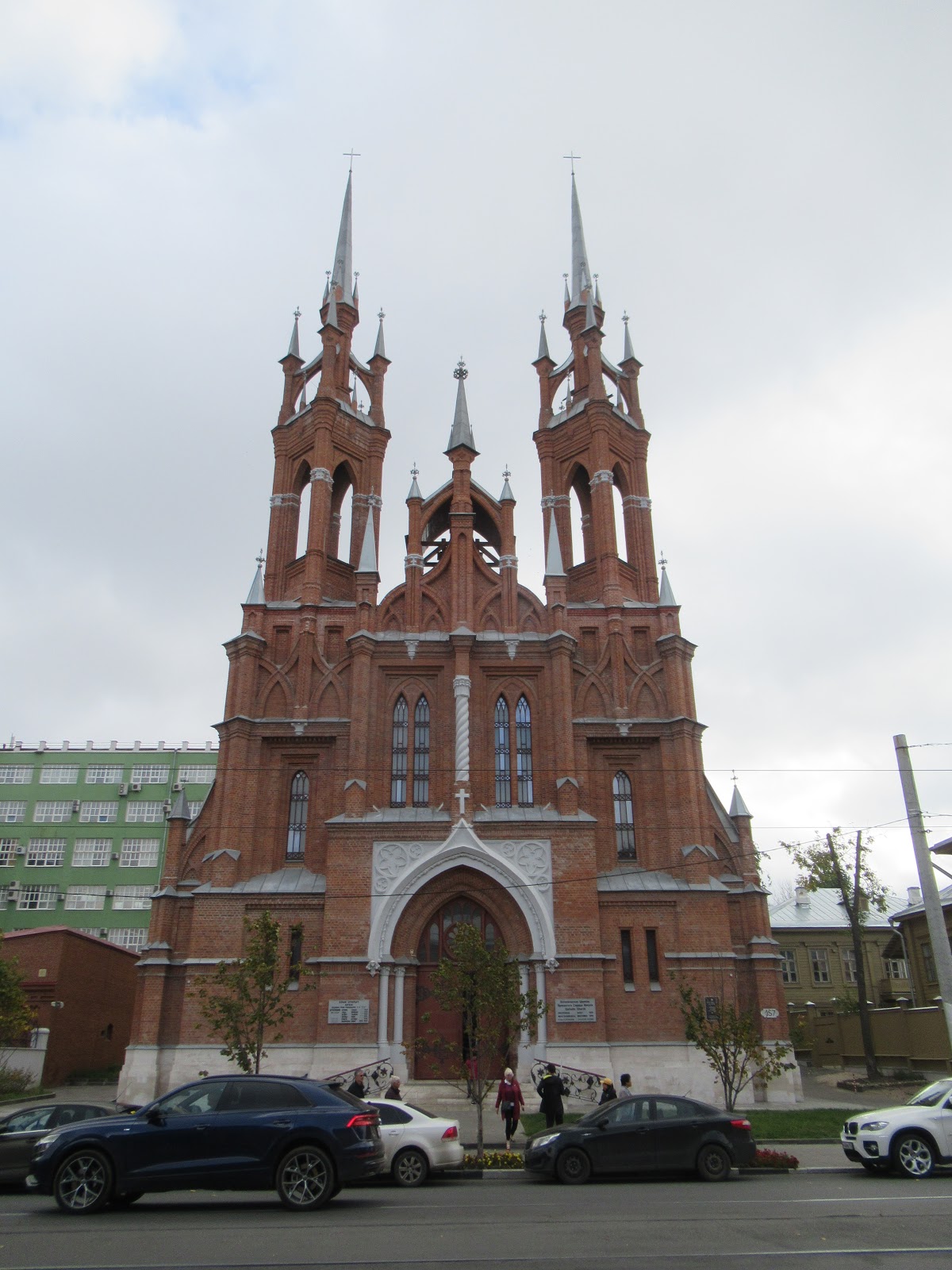
 The Catholic church.
 An interesting ld building where Tolstoy lived and besides it...


...a statue of Buratino, the character in The Golden Key, or the Adventures of Bursting by Aleksey Tolstoy.
                                                
 And just to finish the art deco theme, a merchants house used during the war as the Swedish Embassy.


Thursday, 3 October 2019

Ulyanovsk

Ulyanovsk

This is a much newer city, founded in 1640 hence it doesn't have a kremlin as the boundaries of the empire had expanded far beyond here. It was originally named Sinbursk, then Simbirsk and then renamed Ulyanovsk after Lenin whose real name was Ulyanov. His family home was our first stop. His father was a doctor and the family moved several times but finally bought this house where the family lived until they had to sell and move away when Lenin's brother was  executed for being a terrorist during the tsar Nicholas's reign for being involved with the assassination of Alexander III in St Petersburg.

The family home.
 You had to watch where you put your feet as there are sparklers embedded in the ground to protect the house against fire. The whole area is made from timber and this house and museum has a special sprinkler system and there is a fire station just 100 metres up the road.
 We weren't able to take photos inside without paying a large extra amount so no photos but the area does have some other interesting buildings such as this one.
 The fire station.
 Another  pretty building.
 An iconic Gazelle, a robust four wheel drive vehicle seen all over Russia but 90% are grey, a few are military green and the police have blue and the post office yellow but there are no other colours produced.
 A cathedral but all of them were destroyed and these are replicas.

 Some modern memorial in the Crown park area.
 A government building and another Gazelle.
 And a clos e up.
 The view from the top of the river bank where the park is located. This bridge is the Emperors bridge completed in 1913 and is a joint rail and road bridge 3 kilometres long. It isn't sufficient for current levels of traffic and the Presidents bridge was built a decade ago further upstream and is 6 kilometres long.