Wednesday, 4 January 2017

Santiago, Wednesday 3rd - 4th January 2017

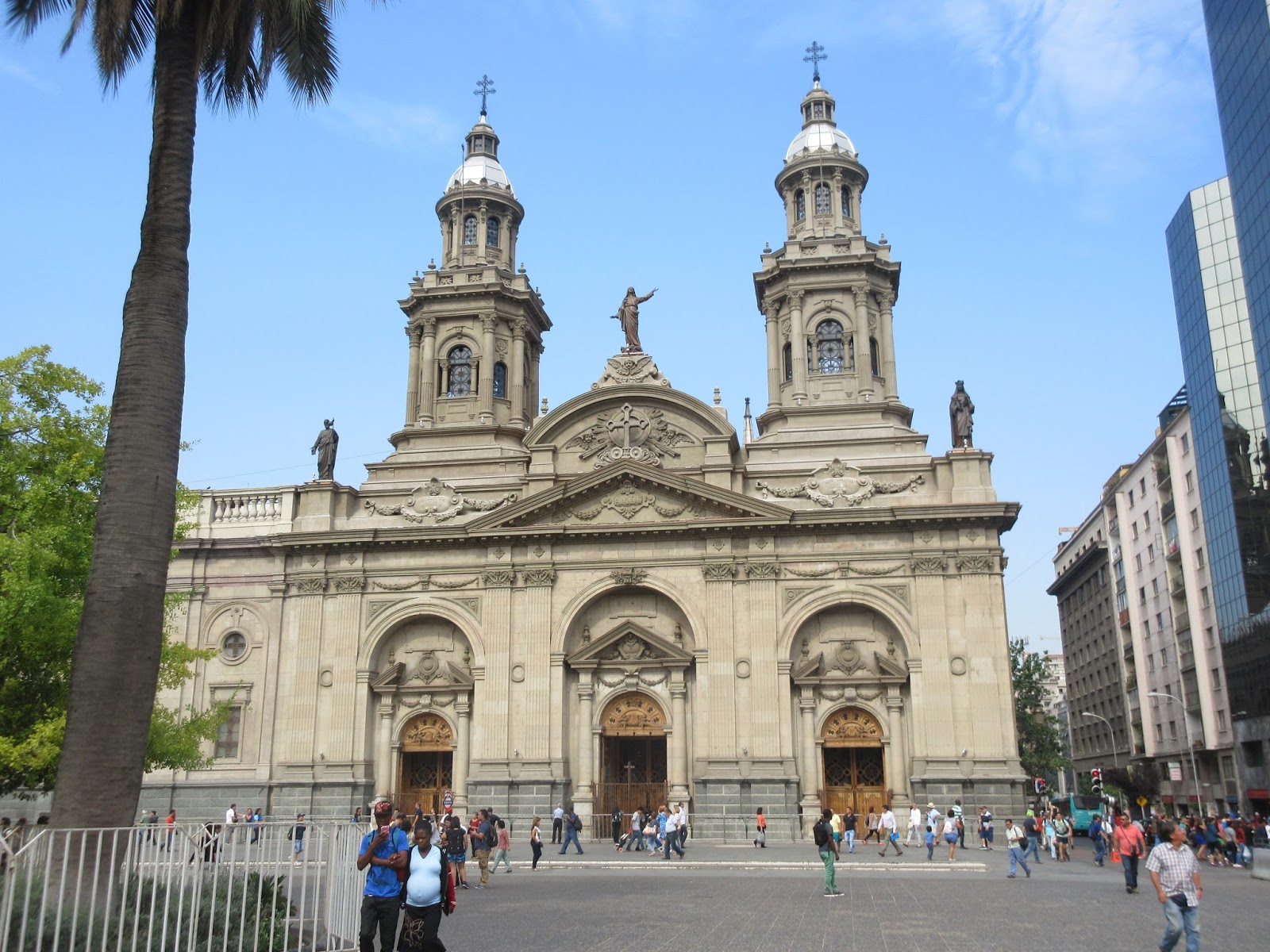
I went for a walk around the city centre starting with the cathedral in the Plaza des Armas.

A former palace which is now the main post office.
The Chamber of Deputies until 11th September when the military took over and General Pinoche ruled the country. The chamber now sits in Valparaiso.
The presidential palace and formerly where the mint was housed. When the military took over, the guards inside resisted and it was bombed from the air being it was also taken over by the military.
The Stock Exchange and note the French influence which was a result of a determined effort to move away from their Spanish colonial rulers.
The Theatre which was holding a number of cultural events throughout the city for the first three weeks of January.
Casillero Hildago, built in 16th century on top of the Santa Lucia hill in the centre of Santiago. And the view from the top would be pleasant if there wasn't a haze of pollution which hung over the city.


The haze and Cerro Santa Cristobal off to the left and the 63 storey Sky tower to the right but not worth trying to see the view due to the pollution.
A statue of one of the local Mapuche chiefs who attacked the Spanish city on 11th September 1541 and burned most of it, just seven months after the Spanish founded the city and started building.
There were several cultural events, this was one of the Mapuche inspired offerings. They are keen to preserve their own culture and identity even after several hundred years.
The funicular railway to the top of Santa Cristalbal was under going maintenance so I had to walk up but the view was better than Santa Lucia as it was higher.
Museo del Belles Artes or Museum of Fine Arts built in 1912 to celebrate a century of independence. Not the heavy French influence on both the outside and the inside as a marked departure from any Spanish influence.
 A detail of one of the roof supports.
 A couple of views of the glass roof above the main central area.

And another great building, the front and side of the former railway station. After the military took over, the government invested in raids and let the railway network fade into obscurity. The railways are still suffering and there are no trains now from this station although the fabric of the building has been extensively renovated.

Before I went to have a drink, I tried sopiapillas, some street food made from squash, about the size of a slice of bread, coloured bright yellow and served with a piquant sauce...it fills a hole and is traditional snack food in Chile. Next it was off to a bar and here is the outside of La Piojera, a play on la piojo meaning a louse. It is a bit of a dive but it appears in many guide books as the place to go.


 La Piojera is well known for serving terremoto, a small cup of which is shown below. It is white wine with a dash of grenadine in the bottom and a scoop of ice cream in the top. It is the traditional drink served in September to celebrate Chilean independence.

Just virtually next door is the fish market. It became such a popular destination that the central area has been taken over by expensive restaurants and the actual market has been pushed to one side.
 A great delicacy can be bought here...king crab but it costs about USD300 for one crab but it can serve six people comfortably. More affordable is to opt for a single leg...it tastes great so it is worth the price if you haven't had it before.
 A couple of views of the restaurant area under the main roof.

That evening there was a cycling event...an attempt to promote cycling, reclaim the streets, anti car, encouraging healthy living, a chance to protest and a host of other reasons. It occurs on the first Tuesday of every month and attracts thousands of cyclists and gridlocks the city.
Another local drink option that I tried...this is mote con huesillo, made of stewed dried peaches with a couple of halves of peaches and in the bottom a type of maize.

Then I caught up in a demonstration whilst trying to catch the metro to the main station. The mapuche who make up about 5% of the population but concentrated in the area around Santiago and southwards have resisted dominance and have tried to maintain their own culture and beliefs. Their spiritual leader has been in prison without trail for over three years after allegedly being involved in a firebombing of a landlords house. 

The air was full of tear gas drifting around the plaza and down side streets. The ground was wet from various water cannons that were deployed in the area. A couple of riot police vans moving into position.
A water cannon moving around the main roundabout in Plaza d'Italia, the traditional centre where all demonstrations take place.
Water cannon being fired into the crowds.

Another demonstrator is forcibly arrested and taken away.
Police lining up for another show of strength and baton charge to grab a ring leader for arrest.
One of the burning barricades which was soon put out by a water cannon.
Tuesday, 3 January 2017

Santiago, Chile, 2nd - 3rd January 2017

We left Mendoza in the afternoon for the drive from Mendoza to wards the border between Argentina and Chile. The idea was get nearer the border so that we could be near the front and beat the buses that would set out from Mendoza in the morning for the Chilean capital.

We left the arid plains around Mendoza and went straight into the mountains...there was no foothills but it was an abrupt change from flat plain to mountains. We passed Aconcaqua which at 6,961m is the tallest mountain in South America and the tallest in the world outside of the Himalayas.
We passed a lake created by a dam across the river above Mendoza which provides electricity, drinking water and irrigation for the crops planted around the city.
Where the river entered the lake, the muddy waters of the rivers mixed with the clearer waters of the lake and created a marked water line between the two bodies of water.
The road wound its way up the deep canyon that the river had carved into the mountains. It was a spectacular journey and one of the top five road journeys in south America. As we went upstream there was also a railway track making its way along the far side of the valley.
The railway track followed us for a long way along the valley. I wanted to see a train but there was one big problem. We saw a bridge with the support on one side washed way by a mountain stream with the deck of the bridge sagging across the gap at an angle of forty five degrees. It was obvious the there would be no train along this section of track.
The road didn't escape the force of nature either.  One particular river had washed way the road and the railway track. This more than a simple washout as it had carved a great V into the valley side. The temporary replacement road was taken up the tributary and across the arroyo with a temporary bridge and a rough gravel road with an intermittent covering of tarmac  as it snaked its way across the rough ground. It would be some time before a new bridge could be built across the new gap. One side of the former road bridge can just be seen here but the left hand side has disappeared.
The rocks were basically red, coloured by red oxide but there were plenty other colours on view although on a small photo it is hard to catch all the other colours in their full brightness.


The scenery was always changing and there was still a lot to see. The road had to negotiate several promontories and there were several tunnels in quick succession high up the valley side above the river.
Eventually the narrow valley opened out to a much broader valley with smaller hills aroundd us but we had  ascended more than 2,500m above Mendoza into the Andes.
We camped overnight at Uspallata, a small town high in the hills overlooking a section of the valley that was wider and flatter and allowed some agriculture. We had a fun truck clean which means that everything is taken off and washed...whether it needed it or not and all the lockers are cleared out, washed and repacked.

We couldn't take any agricultural produce over the border so we ate what we could and had to burn the rest. It was also an excuse to drink all the beer and wine that we could and we had a party as we deserved it after several hours of truck cleaning.

The sun rises the next morning was wonderful with the early morning light shining on the bare rock of the hills just a few kilometres way.
The next day we left Uspallata to continue our journey up the valley to the border.
The railway track followed the road up the valley besides the road. There was a lot of snow and avalanche protection built over the rails but it was all in a poor state of repair.
And then nearly 10kms from the border we joined the back of the queue to get over the border. We weren't allow to queue in the tunnel through the mountain, so we had to wait  patiently for a few vehicles to get through before the queue gain inched its way forward. But we had more views of the disintegrating snow protection given to the railway.
 We went through the tunnel and came out the other side of the mountain into a series of avalanche protections built into the mountain side. This was a view down the valley from inside the avalanche tunnel.
And a better photo without the concrete pillars in the view.
And a look back up the hill to the road as it swept down the hill side with the protection of the avalanche tunnel.
But there was little benefit in getting through the tunnel as the queues where still very long on the far side but at least the scenery was interesting even if we could see the queue parked nose to bumper all the way down the road.
The border took us nearly four hours to get through and we had jumped the line of cars as we were a truck and had a priority line reserved for trucks and buses. After the border and immigrtio controls, the road descended rapidly in a series of tight hairpin bends with 29 of them between the border post and the red building in the distance at the bottom of the slope. (I didn't count them myself but each one was labelled with a bit metallic sign descending from 29 at the top to zero at the bottom.
 Then we left the mountains and were into fettles allies and eventually rolling countryside as we descended into the capital of Santiago.
 The arid nature of the countryside was emphasised as patches of it had caught alight and had been burned but I was not certain whether it was intentional land clearance or an unfortunate accident but we were in the centre of Santiago by early afternoon.

Sunday, 1 January 2017

Estancia and horse riding and Happy New Year

We left Cafayate and headed back to wards Salta but pulled off the road to visit an estancia. It was a major tobacco growing farm but also had horses...and we were going riding...not quite riding through the pampas but that is yet to come. But first we had a welcome breakfast.

Then we got our horses and we were away. The only shot of me on my horse.
 Christina was happy enough but Shannon looks most unhappy but actually she is a good rider and enjoyed the ride.
 A few photos of the scenery around the estancia.
 Riding through the local village.
 We forded a river then followed it upstream before turning around and heading home through the shade of some trees.

 We moved on to our bush cap for the evening,,,only to be moved on by the local police and eventually set up camp in a truck park for the rest of the night.
 We drove on to another major wine producing region around Mendoza. It is very arid with water from the mountains used for irrigation. And no its not Madagascar but there are bilobab trees here.
 Yet another great sunset. We couldn't find a good bush camp and after asking the local police, we ended up camping next to a police check point near the main road.
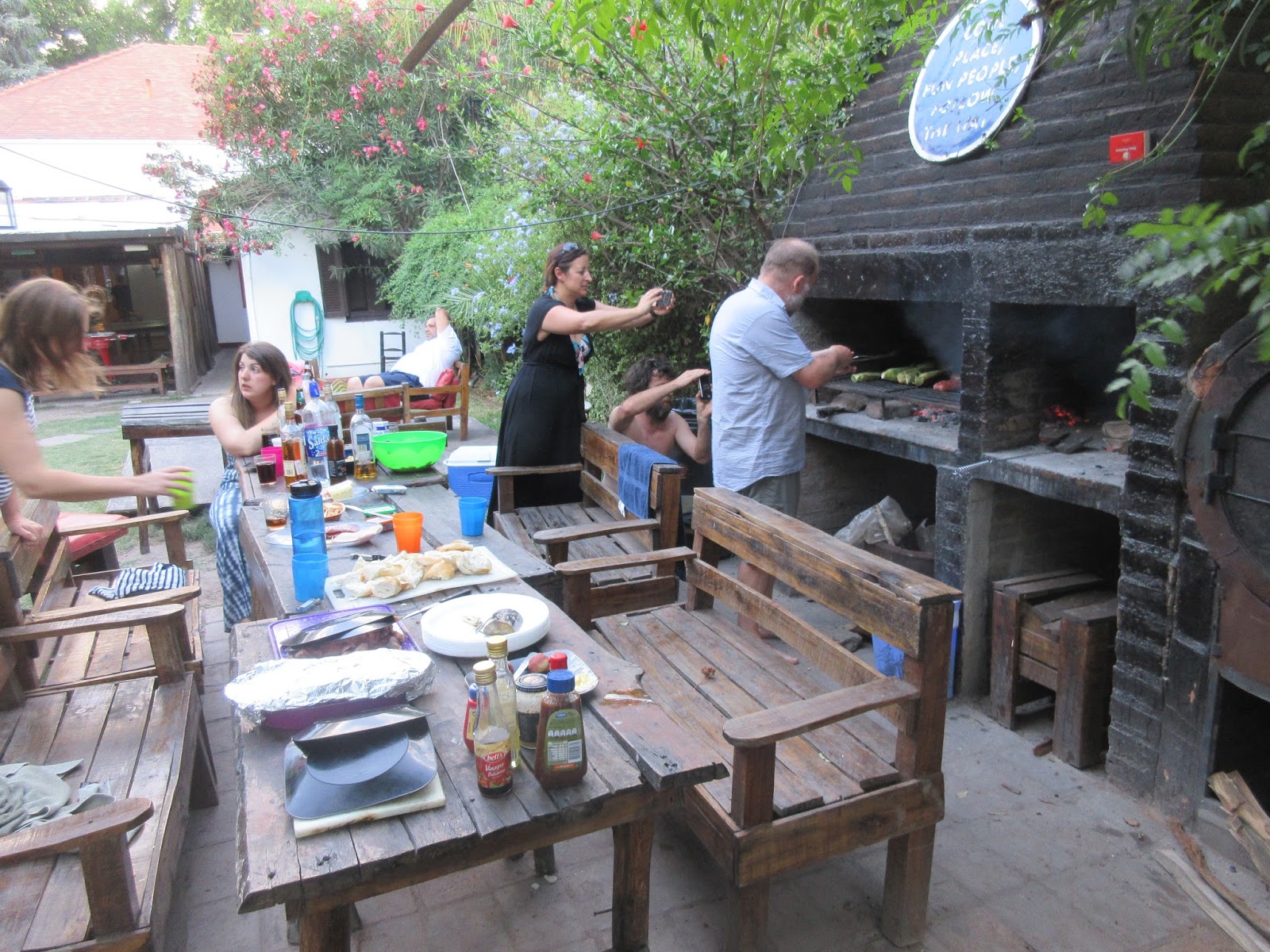
 And finally we were in Mendoza for New Years Eve. We had a BBQ plus loads of wine...in fact so much that I allegedly went skinny dipping but there is no photographic evidence so I can deny it!

 Every corner in Mendoza seems to have a Christmas tree...and here are a selection just for fun...ans Happy New Year to everyone!